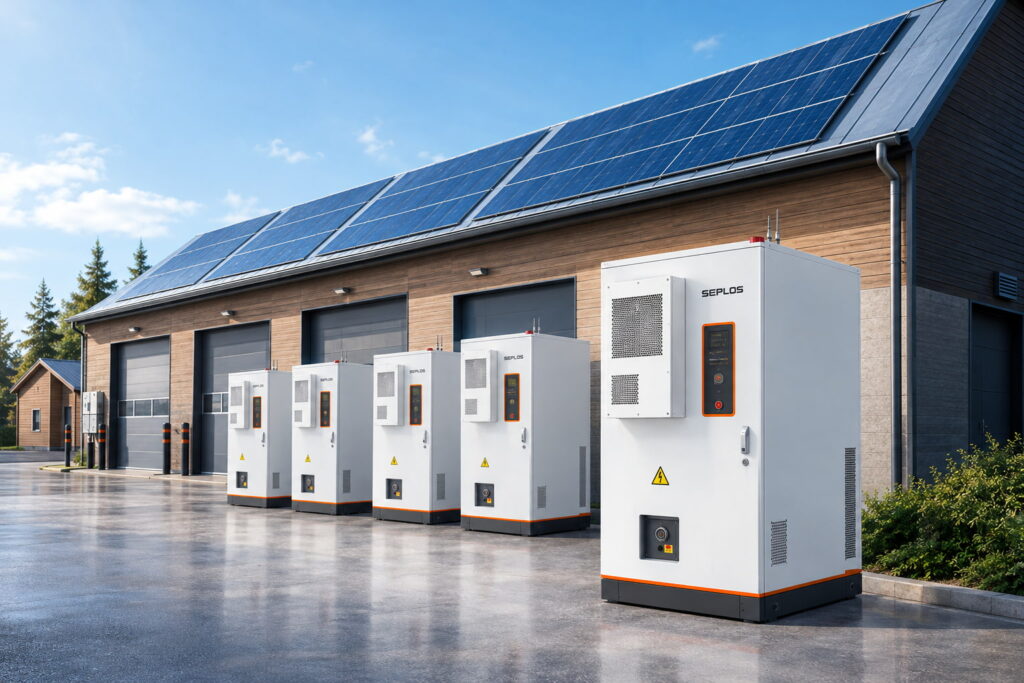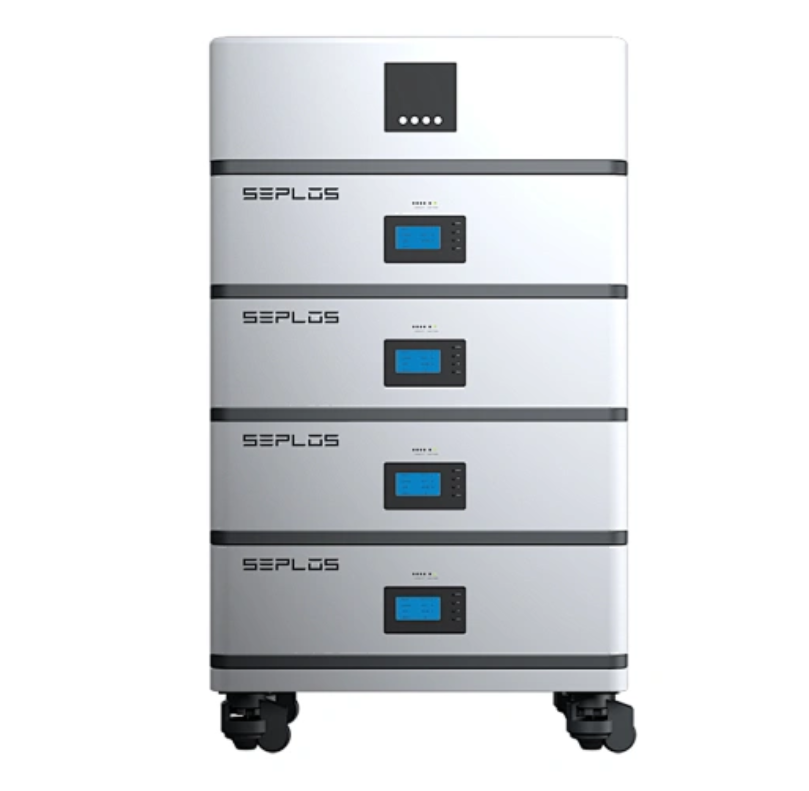
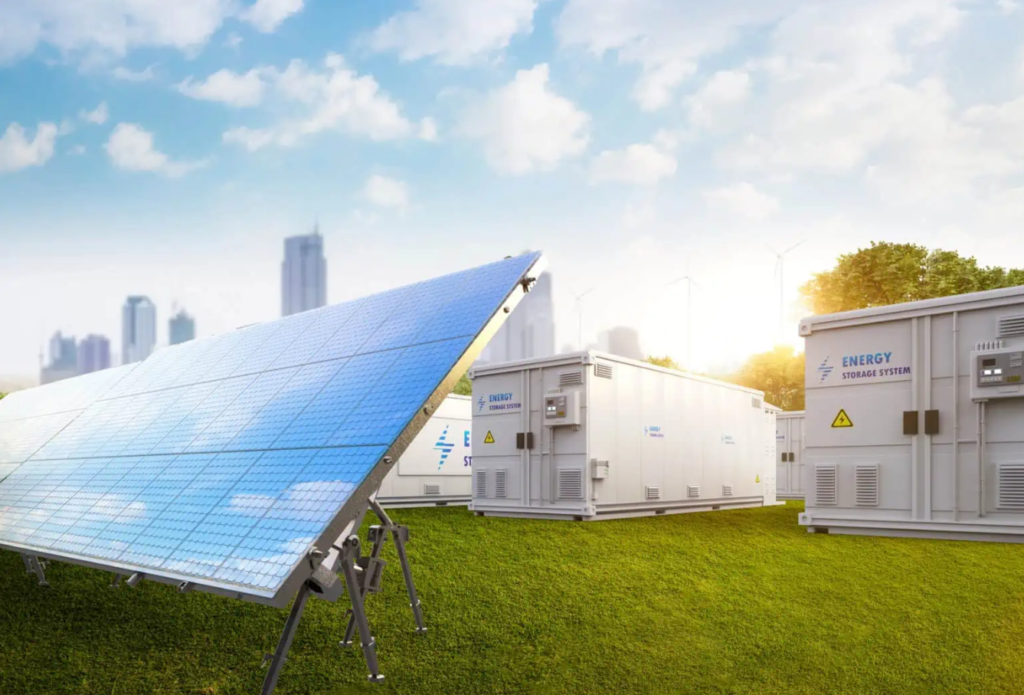
Solar energy storage systems allow businesses to store surplus solar generation and use it when facility demand is higher or solar output is lower. Depending on the system design, storage can support solar self-consumption, peak-demand management, selected backup loads, and more flexible energy use.
The value of storage depends on the facility load profile, electricity tariff, solar production, battery capacity, PCS output, system efficiency, control strategy, and backup requirements. This article explains the main operational roles of storage in commercial solar power systems.

Managing Solar Generation Variability
Solar generation changes with the time of day, weather, season, and installation conditions. A battery can store part of the electricity produced during periods of surplus generation and discharge it later when solar output falls or facility demand increases.
The amount of demand that can be supported depends on usable battery capacity, PCS or inverter power, facility loads, state-of-charge limits, and available solar generation. Backup operation also requires compatible transfer controls, electrical protection, and a system designed to isolate selected loads from the grid during an outage.
Storage can reduce selected grid purchases, but it does not automatically provide continuous off-grid power or eliminate the risk of business interruption.
Supporting Peak Management and Energy Resilience
Battery storage may help businesses reduce electricity costs where time-of-use pricing, demand charges, or high peak-period rates apply. The system can charge from surplus solar generation or, where permitted, lower-cost grid electricity and discharge during selected high-cost periods.
For demand-charge management, both battery capacity and discharge power are important. A system must provide enough kW to reduce the demand peak and enough kWh to sustain that reduction for the required duration.
Actual savings depend on the tariff structure, load profile, solar output, installed cost, system efficiency, battery degradation, financing, incentives, and operating strategy. Storage should therefore be evaluated using interval electricity data rather than general assumptions.

Supporting Renewable Energy Use and Sustainability Goals
Energy storage can increase the amount of onsite solar electricity used by a business by shifting surplus generation to periods of higher demand. This may reduce renewable-energy curtailment and lower selected grid purchases.
The environmental benefit depends on when the battery is charged, the electricity source being displaced, round-trip efficiency, battery lifetime, and end-of-life management. Businesses should therefore evaluate both operational energy use and the lifecycle requirements of the battery system when measuring sustainability performance.
What Should a Business Evaluate Before Adding Solar Storage?
Before adding storage to a commercial solar system, define the primary project objective. Common goals include increasing solar self-consumption, reducing peak demand, shifting electricity use, supporting critical loads, or improving resilience.
Businesses should review interval load data, solar generation, export volumes, electricity tariffs, critical-load power, required backup time, usable battery capacity, PCS output, BMS communication, round-trip efficiency, operating-temperature limits, warranty conditions, and total installed cost.
The battery, BMS, PCS or inverter, EMS, protection equipment, and solar system should be evaluated as one integrated solution.
Frequently Asked Questions
Why is energy storage added to a solar power system?
Storage allows surplus solar electricity to be used later, supporting self-consumption, peak management, and backup loads when the system is designed for those functions.
Can solar battery storage keep a business operating during an outage?
It can support selected loads if the battery, PCS, transfer controls, and electrical system are configured for backup. Runtime depends on capacity and load demand.
Can energy storage reduce commercial electricity costs?
It may reduce time-of-use purchases or demand charges, but savings depend on tariffs, load profiles, system cost, efficiency, and operating strategy.
What is more important: battery capacity or output power?
Both are important. Capacity in kWh determines runtime, while output power in kW determines how much equipment the system can operate at one time.
Conclusion
Solar energy storage systems can support commercial solar projects by shifting surplus generation, managing selected peak loads, and providing backup capability when the system is designed for it.
The most suitable configuration depends on the business load profile, solar production, tariff structure, required power, usable battery capacity, system efficiency, compatibility, and operating objectives. Buyers should assess the complete battery, BMS, PCS or inverter, EMS, protection, installation, and service package before making a project decision.
Planning a commercial solar energy storage project? Share your facility load profile, solar system size, peak demand, electricity tariff, critical loads, required backup time, PCS or inverter model, and installation conditions with the Seplos team for system review.