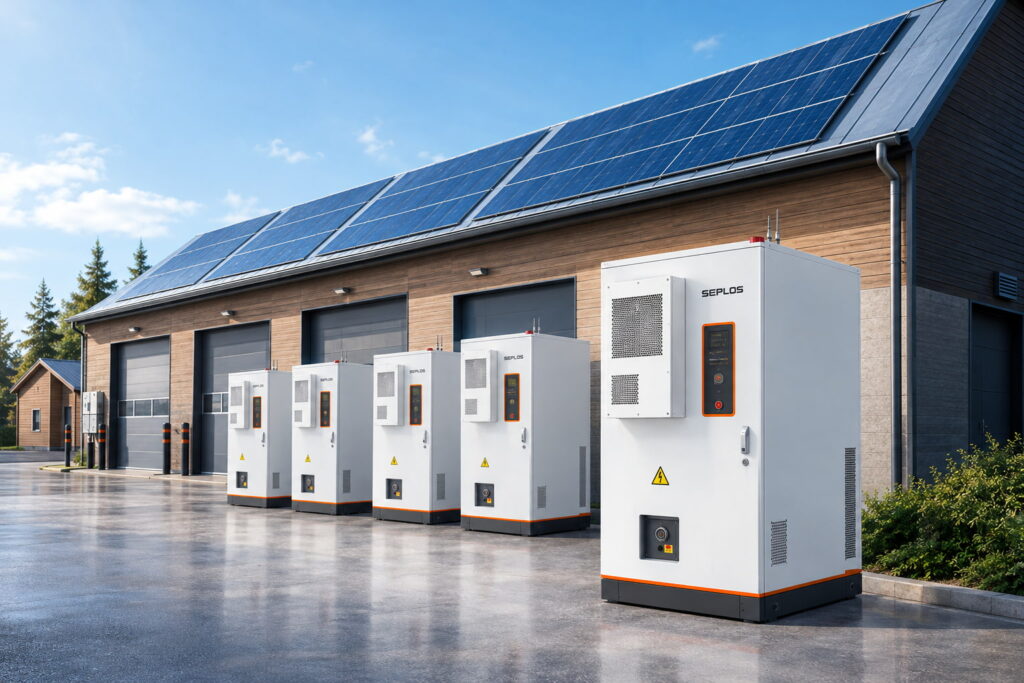

Installing a solar battery is a long-term energy investment, but many homeowners still have one important question:
How long does it take for a solar battery to pay for itself?
The answer depends on several factors, including your electricity prices, battery cost, solar generation, government incentives, and energy consumption patterns.
A solar battery payback period is the time required for your energy savings and financial benefits to recover the initial installation cost.
In this guide, we will explain how to calculate your solar battery payback period, compare global factors affecting ROI, and use a real-world example to help you estimate your own return.
Quick Answer
How long is the average solar battery payback period?
A typical solar battery payback period is around 5–10 years, but it can be shorter in regions with high electricity prices, strong solar generation, or government incentives.
The actual return depends on:
- Initial system cost
- Local electricity rates
- Solar self-consumption rate
- Battery capacity
- Available subsidies
What Factors Affect Solar Battery Payback Period?
A solar battery payback period is influenced by several financial and technical factors:
Electricity Prices
Higher electricity rates usually create greater savings from stored solar energy.
Battery Cost
Lower battery prices reduce the initial investment and shorten the recovery period.
Solar Self-Consumption
Using more stored solar energy instead of purchasing electricity from the grid improves financial returns.
Government Incentives
Tax credits, rebates, and subsidies can significantly reduce upfront costs.
Step 1: Calculating Your Total Initial Investment
The total cost is always broken down into two parts: equipment and “soft costs” (like installation).
(1) Equipment Costs (Core Hardware)
Globally, prices vary, but here are the core components you need to budget for. As a one-stop provider, Seplos offers competitive solutions for all hardware.
- Solar Panels: A typical 10 kWp residential system can range from $1,300 to $2,500 (€1,200 – €2,300) depending on brand and efficiency.
- Hybrid Inverter: The system’s brain. A quality hybrid inverter costs $2,000 – $3,000 (€1,800 – €2,800).
- Battery Storage (LiFePO4): In 2026, LiFePO4 battery costs are projected at $100 – 150/kWh(€90–€140/kWh). A standard 14kWh battery would be $1,400 – $2,100.
(2) Installation, Planning & “Soft Costs”
This is the most variable component globally. It includes labor, mounting hardware, permits, and design fees, often ranging from $4,000 to $8,000 or more.
Step 2: Calculating Your Annual Net Income
This is where you see the return. The universal formula is:
Annual Net Income = Electricity Savings + Export Revenue – Maintenance Cost
(1) Electricity Savings — Your Main Source of Return
This is the simplest and most important part of your return.
Action: Look at your most recent electricity bill. Find the price you pay per kWh (e.g., $0.15 in Texas, $0.25 in California, €0.40 in Germany).
Every kWh you generate and use from your solar system saves you this exact amount.
(2) Export Revenue — The Bonus Income
Most countries have policies to compensate you for surplus energy sent to the grid. The two most common models are:
- Feed-In Tariff (FIT): You are paid a fixed rate for every kWh you export (common in Europe).
- Net Metering: Your meter spins backward, giving you credits against future energy bills (common in the U.S.).
Action: Search online for “[Your Country/State] + solar feed-in tariff” or “net metering policy” to find your local rates.
(3) The Big Boosters: Subsidies and Incentives
This can dramatically shorten your payback period.
Action: Search online for “[Your Country/State] + solar battery incentives 2026”.
Look for key terms like:
- Investment Tax Credit (ITC): A percentage of the total cost deducted from your taxes (e.g., the 30% ITC in the USA).
- VAT Exemption: A removal of value-added tax (e.g., in Germany).
- Rebates/Grants: Direct cash back from your state or utility.
- Low-Interest Loans: Government-backed loans to reduce financing costs.
Step 3: Putting It All Together – A Calculation Worksheet
Now, let’s calculate the payback period. Use the table below to fill in your own numbers.
Your Personal Payback Worksheet
| A. Your Initial Investment | Your Numbers |
| 1. Total System Cost (Hardware + Installation) | $_______ |
| 2. Less: Rebates / Tax Credits | – $_______ |
| 3. Your Final Investment (A1 – A2) | = $_______ |
| B. Your Annual Return | |
| 4. Your Local Electricity Price per kWh | $_______ |
| 5. Your Annual Solar Generation (kWh) | _______ kWh |
| 6. Your Self-Consumption Rate (typically 60-80% with a battery) | _______ % |
| 7. Annual Electricity Savings (B4 x B5 x B6) | = $_______ |
| 8. Your Feed-In Tariff / Export Rate per kWh | $_______ |
| 9. Annual Export Revenue (B8 x B5 x (100% – B6)) | = $_______ |
| 10. Total Annual Return (B7 + B9) | = $_______ |
| C. Your Payback Period | |
| Final Payback in Years (A3 ÷ B10) | = _______ Years |
Worked Example: A High-Cost Country (Germany, 2026 Data)
Let’s see this worksheet in action using data from Germany.
Final Investment: €8,067 (after a 19% VAT exemption).
Annual Return:
Savings: €0.40/kWh x 9,500 kWh x 70% = €2,660
Export Revenue: €0.075/kWh x 9,500 kWh x 30% = €214
Total Annual Return = €2,874
Payback Period: €8,067 ÷ €2,874 = ~2.8 Years
Is Home Battery Storage Worth It For You?
As the example shows, even in a high-cost market, the payback period can be incredibly fast. If you live in a region with lower installation costs or higher solar generation, your payback period could be even shorter.
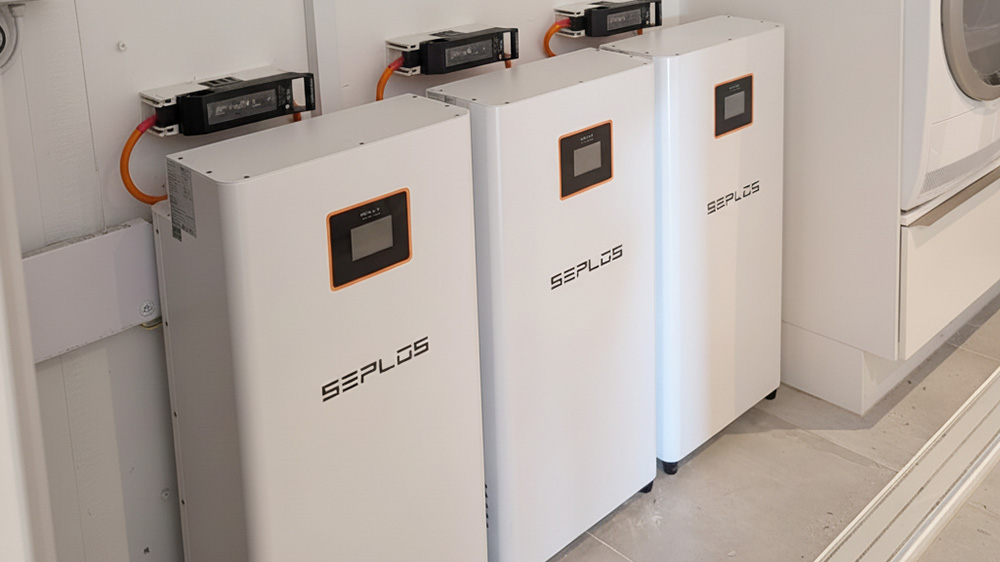
Given that solar panels last over 25 years and high-quality LiFePO4 batteries (like the Seplos Mason 314L) come with a 10-year warranty, you are locking in decades of nearly free electricity after your initial investment is recovered.
This investment insulates you from volatile energy prices and provides true energy independence.
Take Charge of Your Energy Future
A solar battery is more than an energy storage device — it is a long-term investment in lower electricity costs and greater energy independence.
By understanding your solar battery payback period and evaluating local electricity prices, incentives, and energy usage, you can make a smarter storage decision.
Seplos provides reliable LiFePO4 battery storage solutions designed for safety, durability, and long-term performance.
Contact Seplos today to evaluate your energy needs and find the right battery solution for your solar project.
Frequently Asked Questions About Solar Battery Payback Period
How long does a solar battery take to pay for itself?
The payback time depends on electricity prices, installation costs, solar generation, and available incentives. In many markets, homeowners can recover their investment within several years.
Is a solar battery worth the investment?
A solar battery can be valuable for homeowners who want lower electricity bills, protection against rising energy prices, and greater energy independence.
What reduces the solar battery payback period?
Higher electricity rates, increased solar self-consumption, lower installation costs, and government incentives can all shorten the payback period.
Does battery lifespan affect solar battery ROI?
Yes. Battery degradation impacts long-term savings. High-quality LiFePO4 batteries with long cycle life can maintain strong performance over many years.
Should I choose a larger battery to get faster returns?
Not necessarily. An oversized battery increases upfront costs and may reduce ROI. Selecting the right capacity based on actual energy usage usually provides better financial performance.