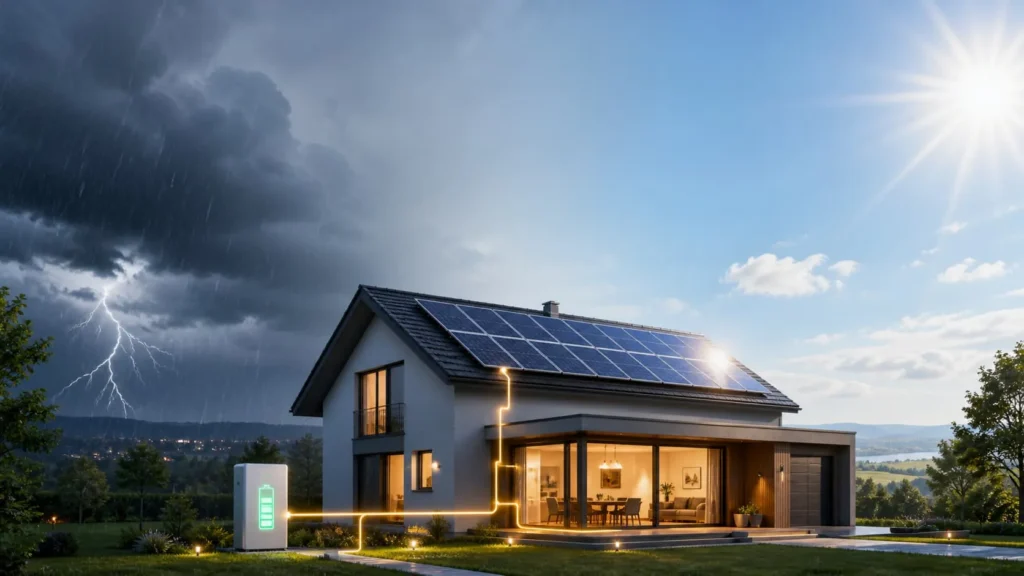
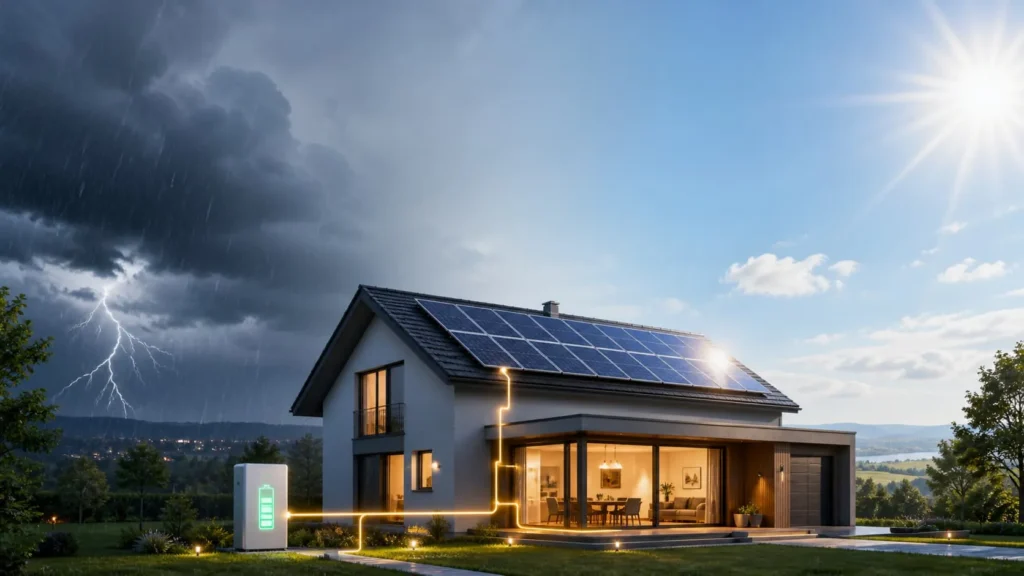
When discussing home solar systems, a common question inevitably arises: “Is solar weather dependent?” It’s a fair concern. What happens during rainy days or long, dark winters? Is this a fatal flaw for renewable energy?
If you are considering investing in a photovoltaic (PV) system for your home or business, If you are considering investing in a photovoltaic (PV) system for your home or business, understanding solar panel reliability on cloudy days is crucial. By gathering real-world experiences from everyday solar users, off-grid enthusiasts, and energy engineers, we reveal the reality of this issue and explain how modern energy systems perfectly solve the “weather problem.”
Quick Answer
Yes, solar power is weather dependent because solar panels produce less electricity on cloudy, rainy, or short winter days. However, this does not make solar unreliable. A well-designed solar system can reduce weather risk through battery storage, net metering, proper system sizing, and backup power planning.
Is Solar Power Weather Dependent? Yes, But It Can Be Managed
We must be honest about a basic physical fact: the energy production of solar panels is directly tied to the weather.
| Weather Condition | Impact on Solar Power | What It Means for System Design |
|---|---|---|
| Sunny Summer Days | Solar panels may produce strong surplus energy | Extra energy can be stored in batteries or exported to the grid |
| Passing Clouds | Output may fluctuate during the day | A battery or grid-tied system can smooth short-term variation |
| Rainy Days | Solar output drops, but panels may still generate some power | Battery storage and grid backup help cover daily demand |
| Long Cloudy Periods | Several days of low generation can reduce available solar energy | Proper battery sizing and essential load planning become important |
| Dark Winter Months | Shorter daylight hours and weaker sunlight reduce seasonal production | System sizing should consider winter generation, not only summer peak output |
As many real-world users share from their experiences:
- Massive Seasonal Differences: On a bright summer day, your system might generate a huge surplus. But during dark, cloudy winter days, production can drop to 10% or even less of your summer peak.
- Daily Fluctuations: Passing clouds and continuous rainy days will affect output in real-time.
But does this mean solar is unreliable? Absolutely not.
Energy experts and veteran users point out a core misconception: “Weather is measured in hours and days, but a solar investment is calculated by annual generation.” You don’t need perfect sunshine every single day; you need a well-designed system to balance your energy budget over the year.
Here are the three most effective strategies people use to overcome weather dependency. For solar installers, distributors, and energy storage suppliers, these strategies are also useful when explaining system reliability, backup expectations, and battery sizing to customers.
3 Ways to Reduce Solar Weather Dependency
When solar panels are limited by the weather, we rely on smart system design to make up the difference.
Solar Battery Storage: The Best Way to Improve Solar Reliability
If solar panels are the engine that generates wealth, a battery is your “home energy bank.”
As one highly upvoted user in a solar forum put it: “Solar alone is weather dependent, but ‘solar plus batteries’ is a completely different story.”
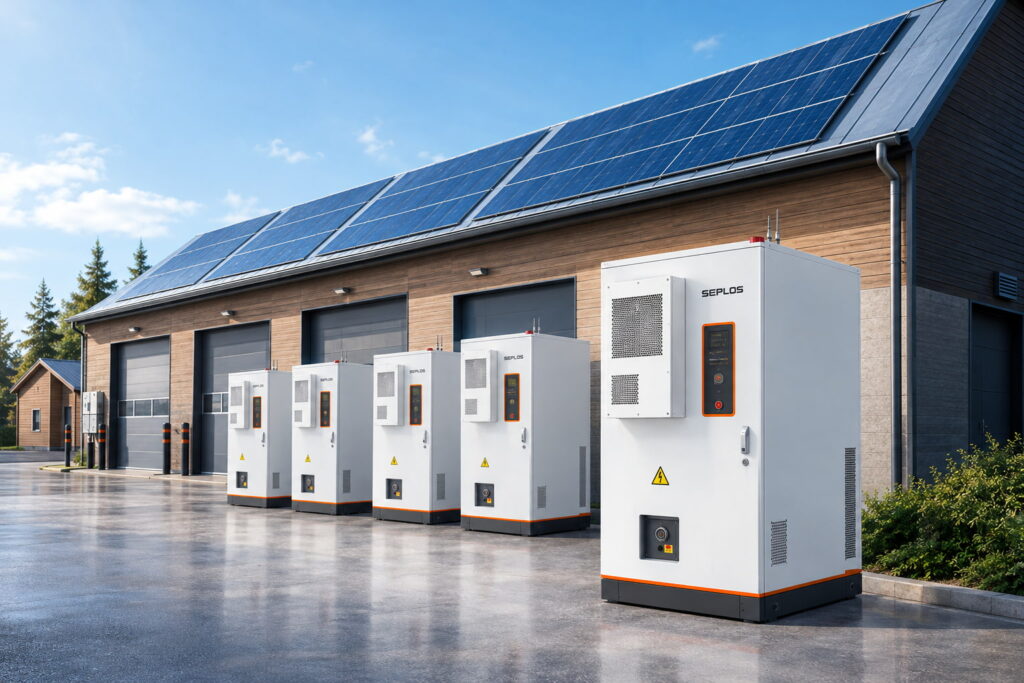
- How it works: On a sunny day, your system often generates far more power than your home needs. Without a battery, this excess energy is either sent back to the grid or wasted. By adding high-quality solar battery storage (like modern, safe LiFePO4 batteries), you can store this surplus to use at night, during rainy days, or even during grid outages.
- Why it’s the ultimate solution: Batteries completely break the limitation of “use it as you generate it.” For those seeking energy independence or living in areas with unstable grids, adding battery capacity is the most direct way to solve weather dependency.
Net Metering: Using the Grid as a Virtual Battery
Not everyone needs to buy a massive battery bank immediately. For users living in urban or suburban areas with a highly stable utility grid, remaining grid-tied is a very common approach.
- Net Metering: During the day, you sell your excess solar power to the utility company (often spinning your meter backward or earning credits). At night or during extended cloudy periods, you simply buy power back from the grid.
- Conclusion: In this model, the national grid acts as an infinitely large virtual battery. While you might still rely on fossil fuels as a backup during bad weather, from an annual financial perspective, your solar system still saves you a massive amount of money.
Smart Solar Sizing for Cloudy Days and Winter
This is a valuable piece of advice from hardcore off-grid users.
- Don’t design for the “best” weather: Many beginners buy solar panels based on the longest, sunniest days of summer. This is a mistake.
- Design for the “worst” weather: The professional approach to off grid solar sizing is to evaluate the worst-case scenario in your area—such as deep winter or a rainy season. You need to increase the number of solar panels and battery capacity so that even during consecutive cloudy days, the system can cover your essential loads (like refrigerators, lighting, and water pumps).
As one off-grid user shared: “I kept adding panels and batteries until the weather was no longer an issue. Now, even if it rains for days, I am completely self-sufficient.”
Why Weather Dependency Is Not Unique to Solar Power
When we harshly judge solar for being weather-dependent, it helps to step back and look at the broader energy picture.
The truth is, no energy source is absolutely independent.
- Extreme heat waves or freezing winters cause massive spikes in heating and cooling demands, putting immense strain on the grid—this is also a form of “weather dependency.”
- Traditional fossil fuels (coal, oil, natural gas), while not blocked by clouds, are highly dependent on complex supply chains, geopolitical stability, and transportation networks. An international crisis can cause traditional energy prices to skyrocket or supplies to be cut off entirely.
In contrast, the sun is right above your roof. While it may occasionally hide behind the clouds, it will never cut off your supply due to political reasons.
The Real Solution: Better Solar + Storage System Design
Let’s return to the original question: Is solar too dependent on the weather?
Solar panels depend on the weather, but a well-designed solar + storage system does not.
If you just slap a few panels on your roof, you are indeed at the mercy of the sky. But if you take a long-term view, plan your system capacity wisely, and integrate high-quality home energy storage batteries, you take control of your own energy lifeline.
Don’t let a cloudy day stop you from embracing clean energy. The weather may be unpredictable, but modern energy storage technology gives us the power to transcend it.
FAQ
Yes. Solar power is weather dependent because panel output changes with sunlight, clouds, rain, season, and daylight hours. However, battery storage, grid connection, and proper sizing can make the system much more reliable.
Yes. Solar panels can still generate electricity on cloudy days, but output is usually lower than on sunny days. The exact reduction depends on cloud thickness, system size, panel angle, and local weather conditions.
Solar batteries help reduce weather dependency by storing surplus energy from sunny periods for use at night, during cloudy weather, or during grid outages.
Not necessarily. Solar panels are weather dependent, but a well-designed solar + storage system can provide reliable power by combining PV generation, battery capacity, grid backup, and smart load planning.
Instead of sizing only for sunny summer days, the system should consider winter generation, local weather patterns, essential loads, battery capacity, and backup requirements.