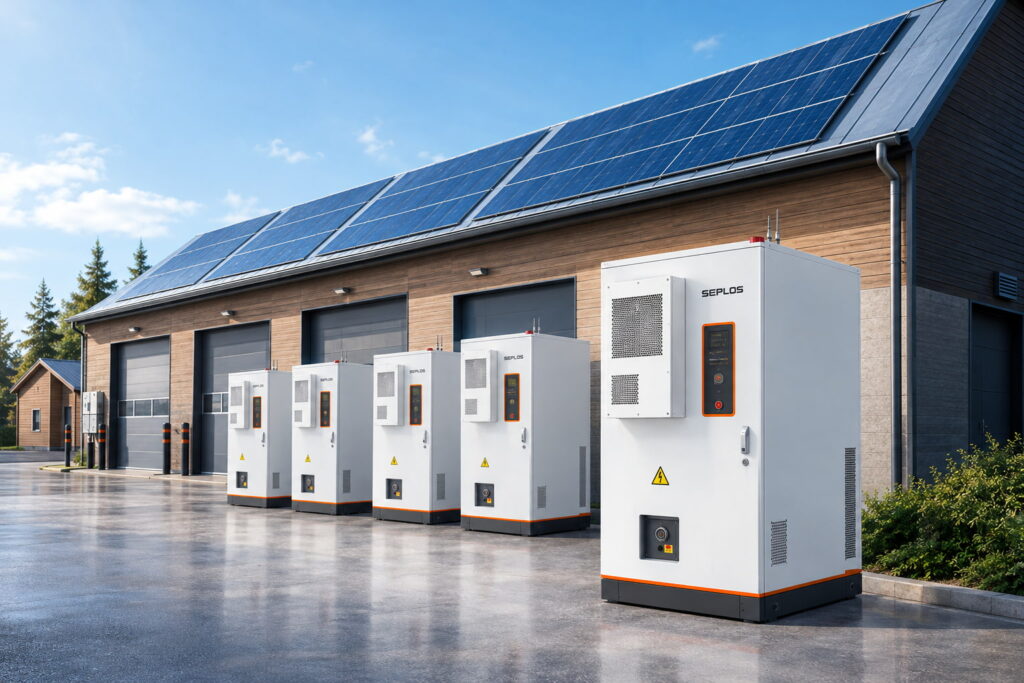
As energy costs continue to rise and sustainability targets tighten, commercial and industrial (C&I) users are turning to energy storage systems (ESS) to achieve energy independence, reduce peak demand charges, and stabilize renewable energy supply. However, many companies face challenges when selecting the right battery technology: short lifespan, safety risks, limited compatibility with inverters, and difficulty in scaling the system as their energy demand grows.
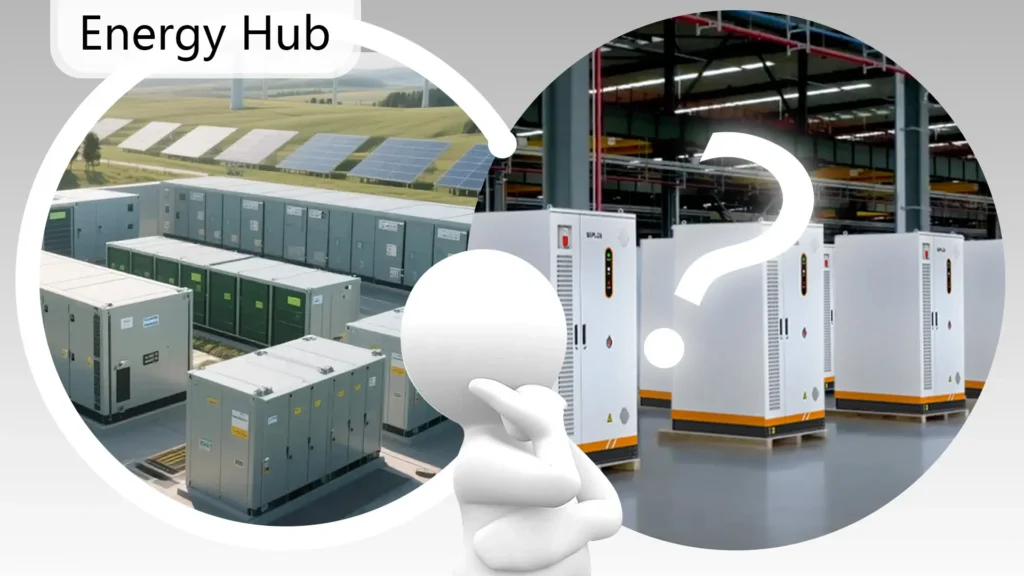
This article explores how to choose the right high voltage battery for commercial and industrial applications, and why high voltage systems often outperform low voltage solutions.
A high voltage battery for industrial use should be selected according to the site’s peak power, average load, required discharge duration, backup requirements, inverter voltage window, operating environment, and future expansion plans.
The most suitable system is not determined by battery capacity alone. Buyers should also compare usable energy, continuous power, peak power, cycle life, BMS protection, communication compatibility, thermal management, and total lifetime cost.
Key Challenges in C&I Energy Storage—and How High Voltage Batteries Solve Them
1. Short Lifespan and High Maintenance Costs
The Challenge: Many energy storage solutions wear out quickly, resulting in frequent replacements and higher operational expenses.
The Solution: The Seplos rack mount high voltage system uses 314Ah LiFePO4 cells with over 8,000 cycles, ensuring long lifespan and reducing maintenance costs.
2. Safety Concerns in Daily Operations
The Challenge: Overheating, short circuits, or poor cell balancing can lead to safety risks.
The Solution: An advanced Battery Management System (BMS) provides all-round protection against over-voltage, under-voltage, over-current, over-temperature, and short-circuits. Passive cell balancing ensures stable performance even under high loads.
What Does a High Voltage BMS Control?
A Seplos high voltage BMS monitors cell voltage, module voltage, pack current, temperature, state of charge, alarms, contactors, and charging or discharging limits. It also communicates with the inverter or PCS so that the battery operates within its approved voltage, current, and temperature range.
For commercial and industrial projects, buyers should confirm the supported communication protocol, maximum number of battery modules, inverter compatibility, fault-handling logic, and available monitoring functions.
3. Poor Compatibility with Inverters and EMS
The Challenge: Many storage systems cannot seamlessly integrate with existing energy infrastructure.
The Solution: The system supports CAN and RS485 protocols, ensuring compatibility with leading inverter brands like Sofar, Growatt, Goodwe, Deye, and Sinexcel. This makes integration faster and more reliable.
High Voltage Battery for Commercial Use
A high voltage battery for commercial use may support peak shaving, solar self-consumption, backup power, load shifting, and energy-cost management. The required configuration depends on the building’s electricity profile, operating hours, tariff structure, critical loads, and available solar generation.
Commercial buyers should compare both battery capacity in kWh and output power in kW. Capacity determines the available operating time, while power determines how much equipment can run simultaneously.
4. Difficulty in Expanding Storage Capacity
The Challenge: Businesses often outgrow their initial energy storage capacity but struggle with scalable solutions.
The Solution: With a modular design, up to 15 battery units can be connected in series, scaling from 60kWh to over 220kWh—ideal for growing businesses.
5. Harsh Environmental Conditions
The Challenge: Many systems fail in demanding environments, limiting installation flexibility.
The Solution: The system operates reliably between -15°C and 45°C, at humidity levels up to 65%, and altitudes of 2000m, making it suitable for diverse industrial environments.
6. Low Efficiency of Traditional Low Voltage Systems
The Challenge: Low voltage batteries often suffer from higher wiring losses and lower conversion efficiency.
The Solution: By adopting a high voltage architecture (192V–704V), this system reduces energy loss and increases efficiency, making it a superior choice in the debate of high voltage vs low voltage solar battery.
What Does a 0.5C Battery Rating Mean?
A 0.5C battery rating means the battery can theoretically charge or discharge its rated capacity over approximately two hours. For example, a 200kWh battery operating at 0.5C would have a nominal power level of about 100kW, subject to the limits of the battery, BMS, PCS, temperature, and system configuration.
For large-scale applications, the required C-rate should be selected according to discharge duration, peak power, cycling frequency, thermal conditions, warranty limits, and the intended operating strategy.
Why Work with a High Voltage Battery System Provider?
Choosing the right technology is only half the battle. Partnering with an experienced high voltage battery system provider ensures expert guidance, reliable after-sales service, and long-term performance guarantees.
Seplos delivers cutting-edge high voltage battery systems designed for safety, scalability, and efficiency, helping C&I users optimize their energy strategies.
For commercial and industrial users, high voltage batteries represent the future of energy storage: longer lifespan, higher efficiency, safer operation, and easier scalability.
When considering how to choose the right high voltage battery, look beyond the upfront cost. Evaluate safety, compatibility, scalability, and efficiency. In the debate of high voltage vs low voltage solar battery, the advantages of high voltage systems are clear for C&I applications.
By working with a trusted high voltage battery system provider like Seplos, businesses can ensure they have a reliable and future-proof energy storage solution.
High Voltage Battery Selection Checklist
Load and Backup Requirements
Review peak power, average load, required backup duration, critical equipment, operating hours, and expected cycling frequency.
Battery and System Specifications
Compare usable capacity, continuous power, peak power, system voltage, C-rate, cycle life, depth of discharge, and expected degradation.
BMS and Inverter Integration
Confirm communication protocol, inverter voltage range, charging and discharging limits, alarm handling, remote monitoring, and firmware compatibility.
Installation and Support
Check operating temperature, humidity, altitude, thermal management, maintenance access, warranty terms, technical support, spare-parts availability, and future expansion capability.
The final system should match the site’s actual load profile and operating requirements rather than relying only on advertised capacity or voltage.
FAQs About High Voltage Batteries for Commercial and Industrial Use
What is a high voltage battery for industrial use?
A high voltage industrial battery connects multiple battery modules to create a higher DC operating voltage. It is commonly used in commercial, industrial, microgrid, and renewable energy storage projects requiring higher power and larger capacity.
Why are high voltage batteries suitable for industrial applications?
High voltage systems can deliver the same power with lower current than many low-voltage systems. This may reduce cable losses, current-related heat, and wiring requirements while supporting larger loads.
What should buyers check in a high voltage BMS?
Buyers should check cell and module monitoring, current and temperature protection, contactor control, SOC calculation, communication protocols, inverter compatibility, alarm handling, remote monitoring, and expansion limits.
What is the difference between battery capacity and power?
Battery capacity in kWh shows how much energy is stored. Power in kW shows how much electricity the system can deliver at one time.
What does a 0.5C battery rating mean?
A 0.5C rating generally means the battery can charge or discharge its rated capacity over approximately two hours. Actual operation is also limited by the BMS, PCS, temperature, and warranty conditions.
Can a high voltage battery system be expanded later?
It may be expandable when the BMS, PCS, communication, protection, thermal management, and physical design support additional modules or strings. Expansion limits should be confirmed before purchase.
How do I choose a high voltage battery for commercial use?
Compare the site’s load profile, peak demand, required runtime, usable capacity, output power, inverter compatibility, safety design, operating environment, warranty, and technical support.