
BESS EPC cost is not determined only by the battery container price. For utility-scale and commercial energy storage projects, EPC contractors and investors also need to evaluate land use, civil works, installation, commissioning, O&M, system availability and battery replacement over the full lifecycle.
When you review the latest EPC cost report for your energy storage project, do the numbers make you uneasy? Behind these constantly rising figures lies a common truth in the industry: the purchase price of the storage system is only the tip of the iceberg. The real cost drivers—land, civil engineering, installation, commissioning, and 15–20 years of operation and maintenance—quietly erode your project’s expected returns.
For EPC contractors, this means shrinking profit margins and rising contract risk. For project investors, it directly impacts whether the expected IRR can be achieved—or whether the project survives at all.
Traditional thinking has kept us negotiating equipment prices while ignoring higher-level system optimization. Today, we uncover the next generation of high-density liquid-cooled energy storage systems. Using Seplos UltraPower 2000 as an example, we will break down how a design focused on the entire project lifecycle can reduce EPC costs by 35%.
How Higher Energy Density Reduces BESS EPC Land and Civil Costs
Space efficiency is the most direct and visible lever for reducing initial investment.
Industrial land prices across Europe have continued to rise, and every square meter has become a critical factor in project economics. For large energy storage plants above 100MWh, land costs can account for 15–20% of total investment.
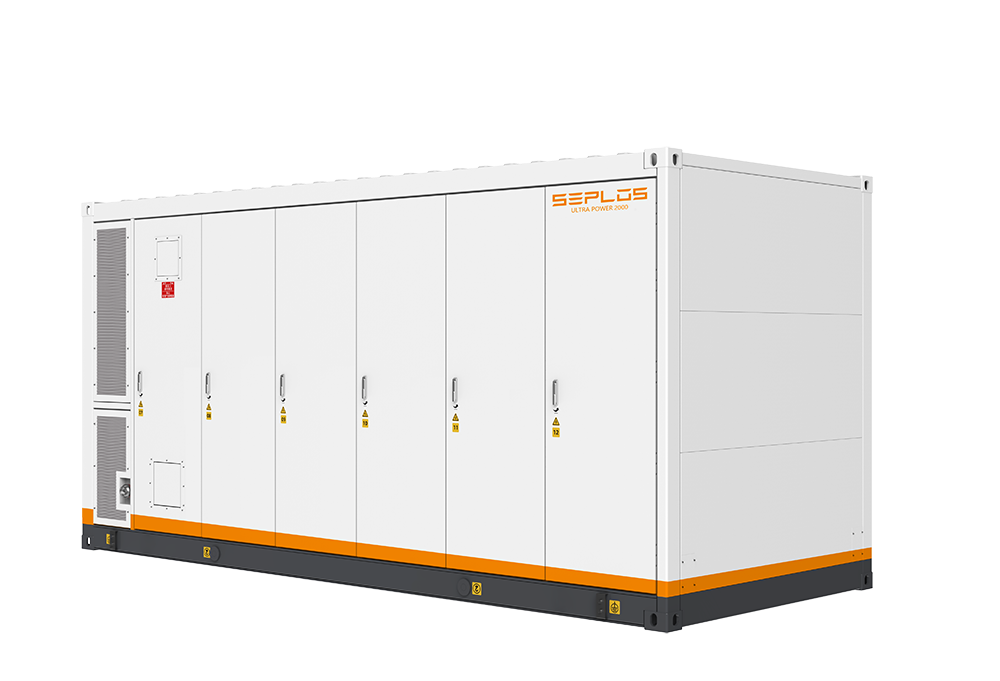
UltraPower 2000 was engineered to address exactly this problem. Through three major innovations, it achieves a revolution in space utilization:
- 314Ah high-capacity LFP cells increase energy density by 35%
- Honeycomb PACK architecture increases space utilization by 40%
- Integrated liquid-cooling pipelines and electrical layout
The result is striking: a standard 20-ft container can house up to 2.089MWh, with a footprint of less than 15 m², while supporting flexible cabinet-level scaling. Compared to conventional air-cooled solutions, the same capacity requires 35% less land.
Project Value
For investors:
In a 200MWh project in Germany’s Ruhr area, land savings alone reached approx. USD 2.35M (based on €480/m² industrial land, FX 1:1.07).
For EPC contractors:
Civil works volume was reduced by 35%, including foundation preparation, fencing, and cable trenching.
Material costs dropped by 25%, and the construction schedule shortened by 20 days.
This is not an equipment tweak—it is a fundamental shift in project planning logic.
How Liquid-Cooled BESS Simplifies Installation and Commissioning
Every day a project misses its grid-connection deadline is a day of lost revenue and accumulating financing costs.
Industry data shows that conventional storage projects require 45–60 days from equipment arrival to full commissioning. Labor and equipment rentals account for 20–25% of EPC costs. In the European market, skilled technicians often cost €800–1,200 per day, making time efficiency a key economic driver.
UltraPower 2000 adopts an all-in-one modular concept, integrating key subsystems—battery packs, thermal management, fire suppression, BMS, and monitoring—inside the factory:
- Each container is fully tested with a 72-hour full-load aging test before shipment
- Aerospace-grade quick connectors deliver plug-and-play electrical and liquid-cooling interfaces
- Smart diagnostic system includes 200+ preset fault codes, significantly reducing on-site troubleshooting
Real-world performance shows a 50% improvement in installation and commissioning efficiency, shortening project schedules by 22 days on a 200MWh plant.
Project Value
For EPC contractors:
In a 100MWh project in the UK, on-site workforce was reduced from the usual 40 personnel to 22, and heavy equipment rental time dropped 50%.
Result: USD 530,000 saved in project execution costs (based on €100/hr labor rates).
For investors:
Commissioning 22 days earlier boosts annual revenue.
At a €0.28/kWh peak-valley spread, the project generated an additional USD 1.16M in its first year.
When we talk about “equipment,” we are actually talking about time value. Every minute earlier a project goes online translates into direct profit.
How Liquid Cooling Reduces BESS O&M Cost Over the Lifecycle
The real battleground of energy storage is not during construction—it is during 15–20 years of operation.
Across European projects, O&M costs account for 25–30% of total lifecycle expenditure. Each additional 1% of unplanned downtime reduces IRR by 0.4–0.6 percentage points. Under Europe’s strict grid performance standards, system reliability directly determines profitability.
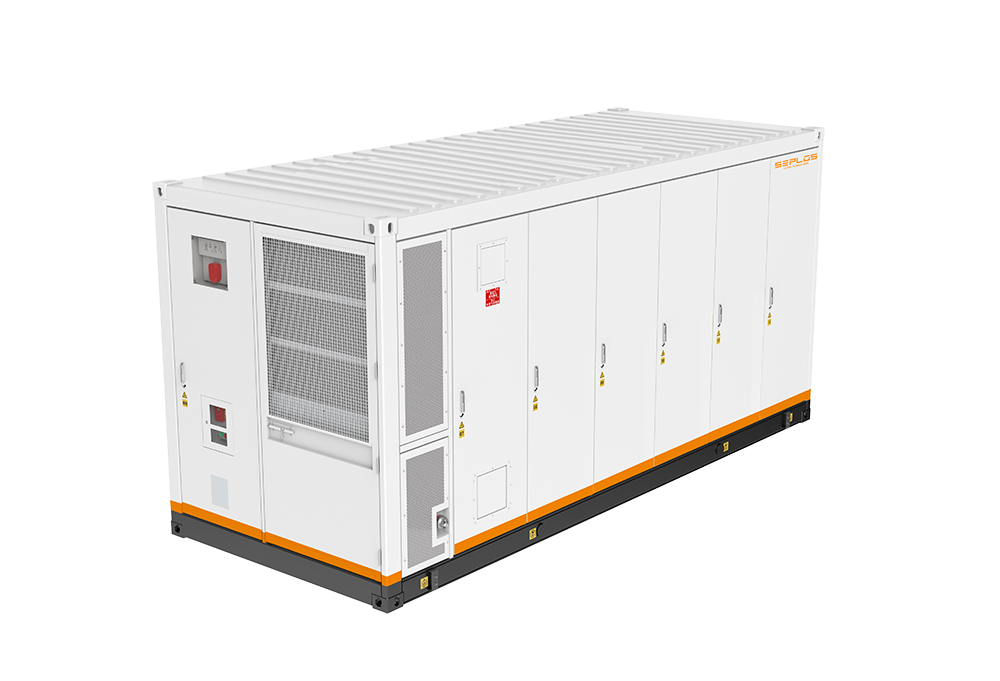
UltraPower 2000 uses cluster-level precision liquid cooling, solving the key weakness of air-cooled systems:
- Direct liquid cooling in contact with the cell surface improves heat transfer efficiency by 300%
- Throttle-balanced liquid distribution ensures uniform coolant flow through each module
- Fully variable cooling units dynamically adjust according to load, reducing energy consumption by 40% and meeting EU efficiency standards
With precise thermal management, two revolutionary outcomes are achieved:
- Pack temperature delta ≤ 2.5°C (industry average: 5–8°C)
- Battery cycle life increases by 15% (measured by EU third-party labs)
Project Value
O&M Cost Reduction:
In a 200MWh project in Spain, failure frequency decreased 60%, reducing annual O&M expenses by USD 420,000 (based on €150k per 100MWh per year service contracts).
Asset Lifetime:
A 15% life extension adds roughly 230 million kWh of output over 15 years.
At Germany’s average discharge price of €0.22/kWh, that equals USD 50.6M in additional revenue.
Residual Value:
At project end, residual battery value increases 15–20%, improving cash flow at the project exit stage.
This is not just technical superiority—it is a complete redesign of the financial model.
BESS EPC Cost Drivers Affected by Liquid-Cooled System Design
| Cost Area | Why It Matters | Liquid-Cooled BESS Advantage |
|---|---|---|
| Land and civil works | Higher footprint increases foundation, trenching and site cost | Higher energy density can reduce required space |
| Installation | More interfaces increase labor and wiring complexity | Integrated container design simplifies deployment |
| Commissioning | Communication mismatch delays grid connection | Factory testing can reduce on-site debugging |
| O&M | Temperature imbalance increases failures and service visits | Liquid cooling supports more stable thermal control |
| Battery life | Faster degradation increases replacement risk | Lower temperature delta can support longer battery life |
Choosing an Energy Storage System Means Choosing TCO
When the evaluation moves from equipment purchase price (CAPEX) to total cost of ownership (TCO) over the lifecycle, the value of a storage solution changes dramatically.
For a 100MWh project in Europe, UltraPower 2000 provides a comprehensive cost optimization:
- Land & civil works savings: ~USD 1.67M (35%)
- Installation & commissioning savings: ~USD 950k (28%)
- 15-year O&M savings: ~USD 6.2M (30%)
- Battery replacement avoided: ~USD 9.03M (no mid-cycle replacement)
Total cost reduction: 35%, with IRR improved by 4.1 percentage points.
In a European market where typical project IRR ranges from 8–10%, this uplift can transform a marginal project into a solid investment—often satisfying the strict ROI requirements of European green funds.
Seplos UltraPower 2000 is not simply an energy storage device. It is a TCO optimization system, built for EPC contractors and investors. By rethinking cost structures from a lifecycle perspective, it frees EPCs from price-only bidding and gives investors predictable and sustainable returns.
As Europe transitions toward subsidy-free grid parity, savvy investors no longer ask,
“How much does your system cost per kWh?”
Instead, they ask:
“How much total cost will your solution save my project?”
FAQ
BESS EPC cost includes engineering, procurement, construction, land preparation, civil works, installation, commissioning, grid connection, O&M and future system replacement or upgrade costs.
Liquid-cooled BESS can reduce EPC cost by improving energy density, lowering land and civil work requirements, simplifying installation, reducing commissioning time and supporting more stable long-term operation.
Yes. Liquid-cooled BESS is often used in large commercial, industrial and utility-scale projects where energy density, thermal stability, cycle life and predictable O&M are important.
Higher energy density can reduce the required footprint, foundation work, cable trenching and site preparation, which may lower EPC cost in space-constrained projects.
Liquid cooling can help reduce temperature differences between battery cells and modules, which may lower thermal stress, improve system reliability and reduce long-term maintenance pressure.