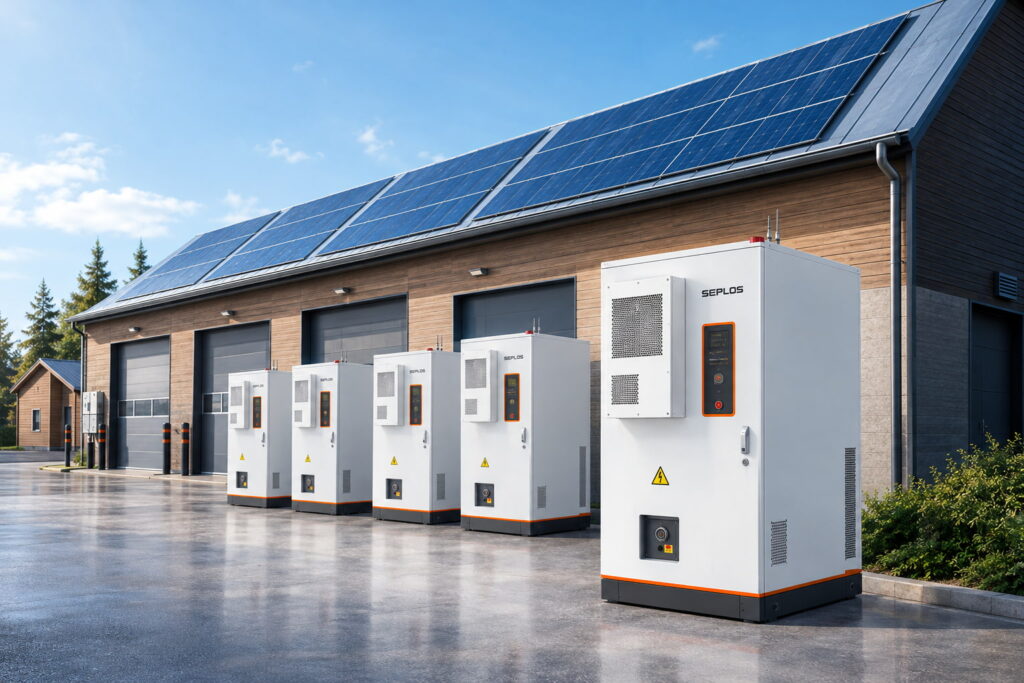
Home battery selection for installers is not only about choosing a system with the right kWh capacity. For residential energy storage projects, installers and distributors also need to consider installation space, mounting type, safety protection, cooling method, expansion path, climate conditions, and after-sales service risk. This guide explains how Seplos home batteries can be matched to real project needs from a practical installer and distributor perspective.
From an installer’s point of view, home energy storage is not just about selling a battery with a certain kWh rating.
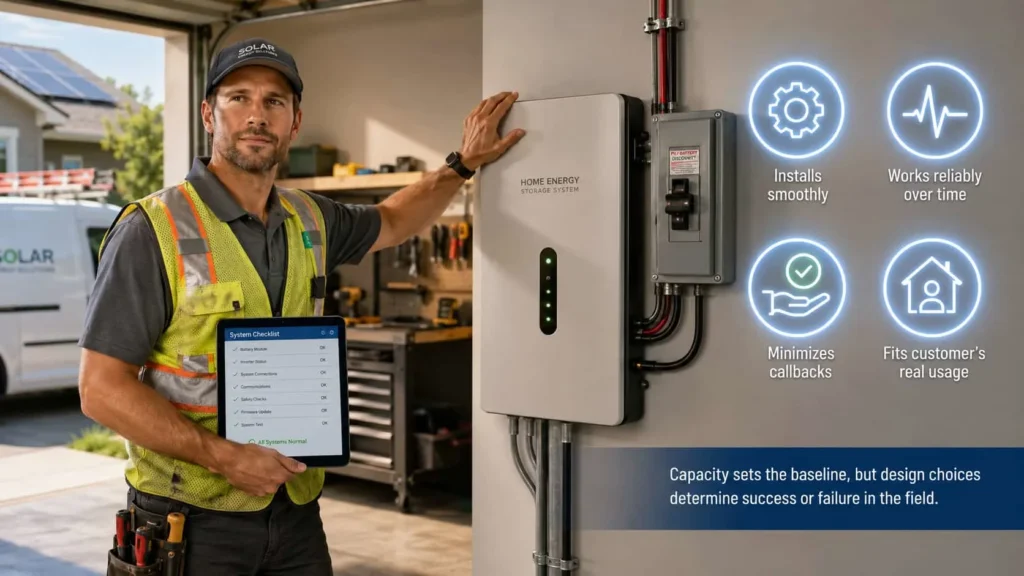
What really matters is whether the system:
- installs smoothly
- works reliably over time
- minimizes callbacks
and fits the customer’s real usage, not just their expectations
After enough projects, most installers reach the same conclusion:
Capacity sets the baseline, but design choices determine success or failure in the field.
This article explains how Seplos home batteries are selected from an installer and distributor perspective, combining capacity with practical design advantages.
Battery Capacity Is Only the Starting Point for Installers
Every project begins with the same question:
“How many kWh does the customer need?”
That question is necessary, but incomplete. For practical home battery selection for installers, capacity should be checked together with installation space, load type, expansion plans, safety design, and long-term serviceability.
In real installations, problems rarely come from insufficient capacity. They usually come from:
- limited installation space
- poor heat dissipation
- unclear protection design
systems that are difficult to expand or service later
This is why experienced installers first define a battery capacity range, then narrow down the model based on structure and use case.
Installation Space Shapes the Right Home Battery Choice
One of the first site checks installers perform is not electrical — it’s physical.
Wall-mounted systems – when space is tight
Typical choice: 104-W (5kWh)
Wall-mounted batteries are common in apartments and compact homes. The 104-W is often chosen because:
- It keeps the floor clear
- Installation is straightforward
- Cable routing is clean
For installers, fewer structural modifications usually mean faster installation and fewer surprises.
Floor-standing systems – the safest option for finished homes
Typical choices: 104-L (10kWh), Mason-280L (16kWh)
In many retrofit projects, wall mounting is simply not ideal. Floor-standing batteries solve that problem:
- No wall reinforcement required
- Easier alignment and leveling
- More tolerance for imperfect installation spaces
The IP65 rating on the 104-L also makes outdoor and garage installations far more flexible.
Rack-mounted batteries – chosen for serviceability, not aesthetics
Typical choice: 104-R (5kWh)
Rack-mounted systems are rarely selected by homeowners themselves — installers recommend them.
Why?
- better airflow
- easier module replacement
- cleaner cable management
For systems expected to operate continuously for 10 years or more, this structure reduces long-term maintenance effort.
Safety design directly affects callback rates
From an installer’s perspective, safety is not abstract — it’s measured in how often you get called back.
Seplos batteries integrate multiple layers of protection that reduce risk at the system level:
- appropriately rated fuses (250A or 400A depending on model)
- external circuit breakers for isolation during service
- Seplos BMS 3.0 for real-time protection
- built-in aerosol fire suppression
These features do not eliminate responsibility, but they significantly reduce single-point failure risks, which is exactly what installers look for.
Why stackable systems reduce project risk
Typical choices: 104-S (5kWh), Mason-280 (16kWh)
Many customers hesitate to commit to large systems upfront. Stackable batteries offer a practical compromise:
- smaller initial system
- lower upfront cost
- clear upgrade path
From an installer’s view, modular expansion is easier to manage than system replacement later. It also reduces pressure during the initial sales phase.
When cooling becomes important in residential projects
Most residential systems operate comfortably with passive cooling.
However, once you move into:
- large inverters
- high continuous loads
- frequent high-rate charging
Thermal management becomes critical.
Fan-cooled models such as Mason-280-FNA, Mason-280L-O, and Mason-560L-N are often selected for these scenarios. They handle sustained power more comfortably and reduce long-term thermal stress on components.
Cold climates require different battery decisions
Typical choice: Mason-210 (10kWh Sodium-ion battery)
In colder regions, installers see performance drop-offs long before customers do.
Sodium-ion batteries offer:
- better low-temperature behavior
- higher thermal stability
- more predictable winter performance
For projects in cold climates, this chemistry often results in fewer seasonal complaints and more stable operation.
Matching Seplos batteries to real installation priorities
Experienced installers rarely choose batteries based on one parameter. Instead, they balance several practical concerns:
| Installer priority | Recommended Seplos solution |
| Limited indoor space | 104-W |
| Future expansion likely | 104-S / Mason-280 |
| Outdoor installation | 104-L |
| High continuous power | Mason-280-FNA |
| Cold climate projects | Mason-210 |
| Whole-home backup | Mason-280 |
| Large or mixed-use systems | Mason-560L-N |
Partial-Home Backup vs Whole-Home Backup
For partial-home or essential-load backup, installers usually focus on critical circuits such as lighting, refrigeration, internet, heating control and selected outlets. For whole-home backup, battery capacity, inverter output, surge load handling and expansion planning become more important. This is why Seplos battery selection should consider both the customer’s backup expectation and the actual load profile.
Final thoughts from the field
In residential energy storage, the best system is not the one with the biggest number on paper.
It’s the one that:
- installs cleanly
- runs quietly
- stays stable over time
- and rarely needs attention
From an installer’s perspective, Seplos batteries are designed around real-world conditions, not just specifications. When capacity, structure, safety, and serviceability align, both installers and homeowners benefit — and that is what defines a successful project.
FAQ
Home battery selection for installers involves more than choosing a kWh capacity. Installers also need to consider mounting type, installation space, safety protection, cooling method, expansion needs, climate conditions, and after-sales service risk.
Partial-home backup supports essential loads such as lighting, refrigeration, internet and selected outlets. Whole-home backup requires larger capacity, stronger inverter output and better expansion planning.
Wall-mounted batteries are suitable for apartments and compact homes where floor space is limited and clean cable routing is important.
Rack-mounted batteries are useful when serviceability, airflow, module replacement and long-term maintenance access are more important than appearance.
Cooling becomes important when the system works with larger inverters, high continuous loads or frequent high-rate charging, because better thermal management can reduce component stress.
For colder regions, sodium-ion options such as Mason-210 may be considered because they provide better low-temperature behavior and more stable winter performance.