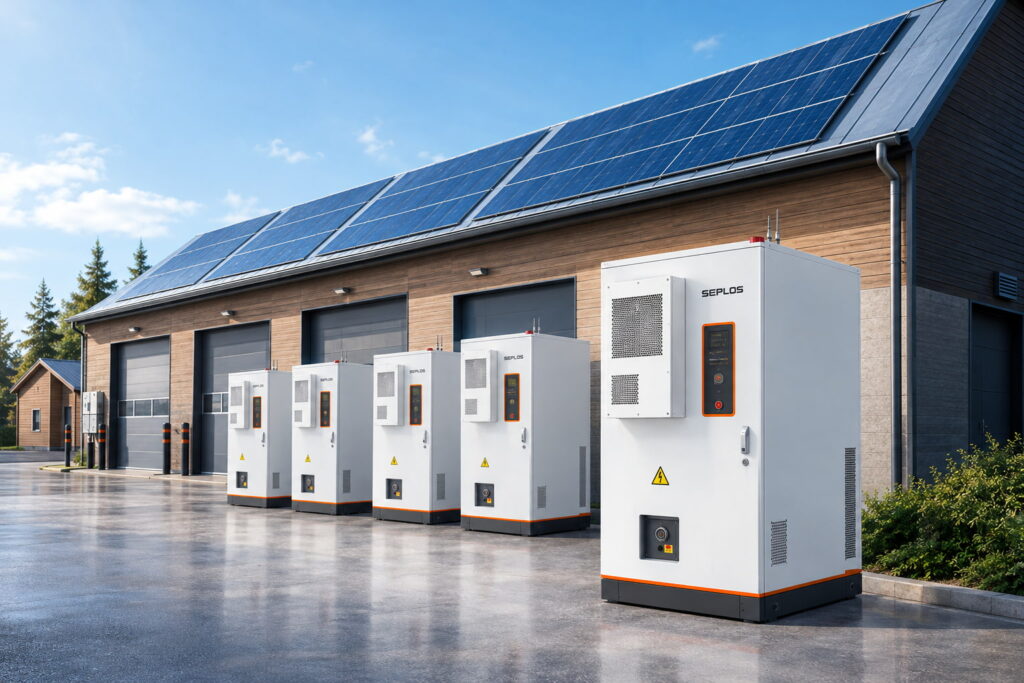


The 32KWH lithium iron phosphate (LiFePO₄) battery pack,A 32kWh LiFePO4 battery pack is a practical capacity option for residential solar storage, backup power and small commercial energy storage projects. This article explains its safety advantages, BMS protection, cycle life, technical parameters and typical use cases for installers, distributors and energy storage buyers. This article provides an in-depth analysis of the technical characteristics, application advantages, and market prospects of the 32KWH LiFePO₄ battery pack, offering a comprehensive reference for battery technology professionals and consumers.
Lithium Iron Phosphate Technology: Synonymous with Battery Safety

Lithium iron phosphate (LiFePO₄), as the cathode material for lithium-ion batteries, offers revolutionary safety advantages due to its unique crystal structure. Compared to traditional ternary lithium batteries, LiFePO₄ batteries exhibit significantly higher thermal stability. They are less prone to thermal runaway even under high temperatures or overcharging conditions, making them the preferred choice for applications with extremely high safety requirements.
32KWH Capacity: The Golden Balance for Residential and Commercial Use
The 32KWH (kilowatt-hour) battery capacity design cleverly balances energy storage with cost-effectiveness:
Residential and small commercial energy storage: A 32kWh battery pack can support solar self-consumption, backup power and off-grid or hybrid storage applications, depending on system design and load demand.
Home Energy Storage: Sufficient to meet the basic electricity needs of an average household for 1-2 days.
Commercial & Industrial Backup Power: Offers reliable emergency power supply.
This capacity design meets the practical needs of most users while maintaining a reasonable price range, making it one of the most cost-effective battery pack specifications on the market.
Technical Parameters and Performance Advantages
Core Performance Indicators
| Parameter | Typical Value |
|---|---|
| Battery type | LiFePO4 / lithium iron phosphate |
| Capacity | 32kWh |
| Energy density | 130–160 Wh/kg |
| Cycle life | ≥3000 cycles to 80% capacity |
| Charging efficiency | Above 95% |
| Operating temperature | -20°C to 60°C |
| Monthly self-discharge | <3% |
In-depth Analysis of Safety Features
The 32KWH LiFePO4 battery pack employs a multi-layered safety design:
Material-Level Safety: LiFePO₄ material has a decomposition temperature exceeding 500°C.
Cell-Level Protection: Each cell is equipped with independent fuse protection.
Module-Level Protection: Fire-resistant and thermally insulating materials are placed between modules.
System-Level Management: An intelligent BMS (Battery Management System) monitors the status of each cell in real-time.
Application Scenarios for Home Energy Storage Systems
System Overview
This 32KWH home energy storage system perfectly integrates with solar power generation. Featuring a modular design, it stores solar energy during the day and supplies power to the home at night, significantly reducing electricity bills and enhancing energy autonomy.
Example Application Scenarios

1. Private Villa
Energy Demand: Large household appliances, multi-room air conditioning, pool filtration systems, garden lighting, etc.
Configuration: 32KWH base system + 16KWH expansion module.
Key Advantages:
Solar power supplies the entire house and charges the storage system during the day.
The storage system can support the entire house’s electricity consumption for 8-10 hours at night, achieving near-zero electricity costs.
Modular design supports future addition of EV charging stations.
Provides uninterrupted power during grid outages, ensuring quality of life.
Intelligent management system optimizes charging and discharging strategies based on usage habits.

2. Vacation Cottage
Energy Demand: Periodic peak electricity usage concentrated on weekends or holidays.
Configuration: 32KWH base system (without expansion).
Key Advantages:
Stores sufficient solar power on weekdays for high-consumption periods during weekends.
Avoids inconveniences caused by unstable grids in remote areas.
Low-maintenance design suits the characteristics of intermittent occupancy.
Provides stable power for water heaters, kitchen appliances, etc.
Significantly reduces energy costs during vacations.
Supports remote monitoring and management, allowing system status checks before travel.
3. Apartment/Townhouse
Energy Demand: Limited space, but with a desire for energy self-sufficiency.
Configuration: 32KWH base system (compact installation).
Key Advantages:
Modular design adapts to limited installation spaces (garage, storage room, etc.).
Works in tandem with solar panels on apartment balconies or rooftops.
Significantly reduces household electricity bills, typically achieving 60-80% self-sufficiency.
Low-noise operation, suitable for densely populated environments.
Smart grid interaction allows purchasing and storing electricity during low-price periods, further reducing costs.
Increases property value and meets modern eco-friendly living demands.
Maintenance and Care Guide
To ensure optimal performance and extend the service life of the 32KWH LiFePO4 battery pack:
Charging Advice: Maintain a daily usage range between 20% and 80%, and perform a full charge-discharge calibration monthly.
Temperature Management: Avoid prolonged exposure to extreme temperature environments.
Storage Conditions: For long-term storage, maintain a 50% charge level and store in a dry, cool place.
Professional Inspection: Annual check-ups by professionals are recommended to assess battery health and connection systems.
Market Trends and Future Outlook
Driven by global carbon neutrality goals, the market for 32KWH LiFePO4 battery packs is experiencing explosive growth:
Continuous Cost Reduction: Economies of scale and process improvements are driving costs down by 8-10% annually.
Ongoing Technological Breakthroughs: Next-generation LiFePO4 batteries are expected to achieve energy densities exceeding 200 Wh/kg.
Improved Recycling Systems: The recycling rate for LiFePO₄ batteries has surpassed 95%, truly enabling a green circular economy.
Five Reasons to Choose the 32KWH Lithium Iron Phosphate Battery Pack
Safety First: The only commercially available lithium battery technology to pass the nail penetration test.
Economical and Practical: Lifecycle cost is over 30% lower than comparable products.
Environmentally Friendly: Contains no rare metals like cobalt, making the production and use process more eco-friendly.
Stable Performance: Slow capacity degradation, retaining over 90% capacity even after five years of use.
Strong Compatibility: Standard modular design compatible with most energy storage systems and EV platforms.
The 32KWH lithium iron phosphate battery pack represents the current gold standard in energy storage technology. Its exceptional safety, ultra-long service life, and excellent economic performance make it the preferred solution for numerous application scenarios. With advancing technology and scaled-up production, this battery technology will continue to drive the energy storage revolution, providing solid support for the clean energy transition.
Whether for electric vehicle users, home energy storage consumers, or commercial and industrial energy managers, choosing the 32KWH lithium iron phosphate battery pack is a wise decision that balances performance, safety, and economy. This technology is redefining our expectations for batteries and paving the way for a sustainable future.
FAQ
A 32kWh LiFePO4 battery pack is a lithium iron phosphate energy storage battery with 32 kilowatt-hours of usable or nominal capacity, depending on system design. It is commonly used for home solar storage, backup power and small commercial energy storage systems.
Runtime depends on household load, inverter size, depth of discharge and backup settings. For many homes, a 32kWh battery can support essential loads for a long outage or provide overnight solar energy use.
LiFePO4 chemistry is widely used in home energy storage because of its thermal stability, long cycle life and safety advantages compared with some other lithium battery chemistries.
The BMS monitors voltage, temperature, SOC, SOH and cell balancing. It helps protect the battery pack from overcharge, over-discharge, short circuit and abnormal temperature conditions.
A 32kWh battery pack can be suitable for small commercial backup power, solar self-consumption and modular expansion projects, depending on the required load, inverter compatibility and system configuration.