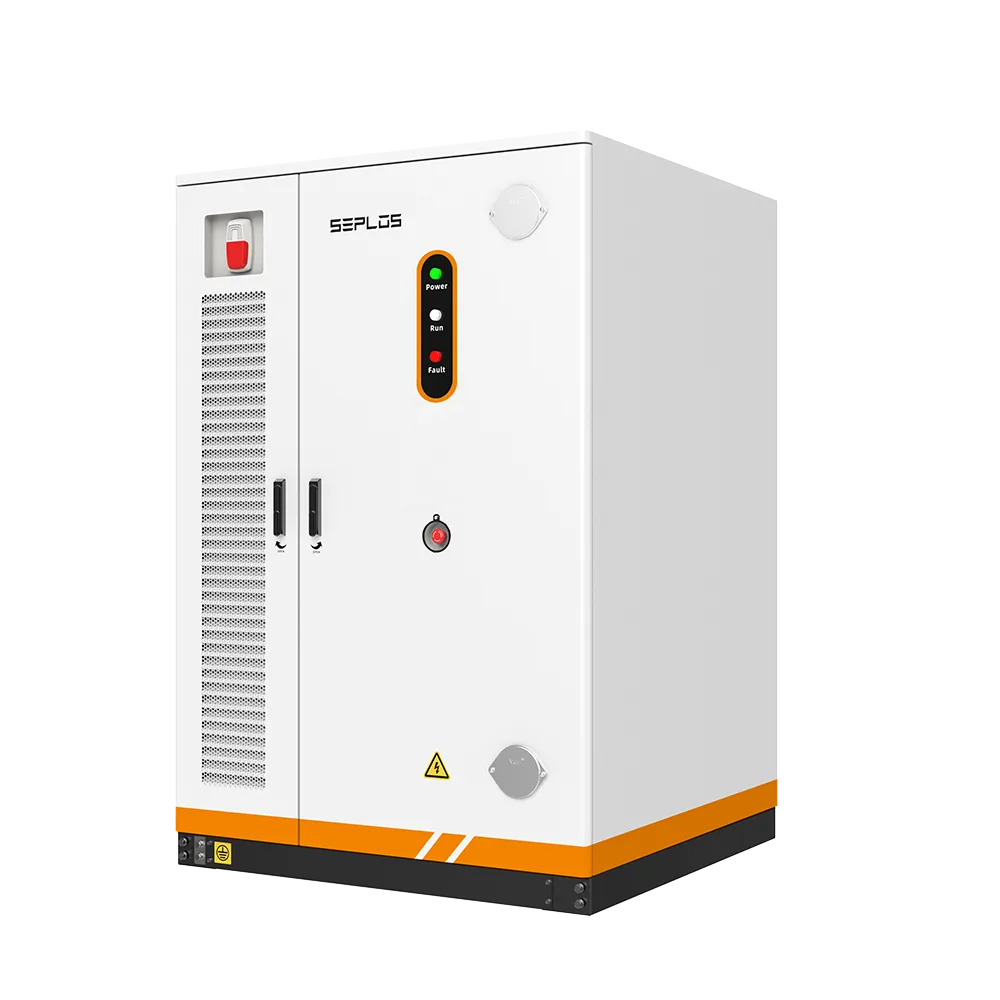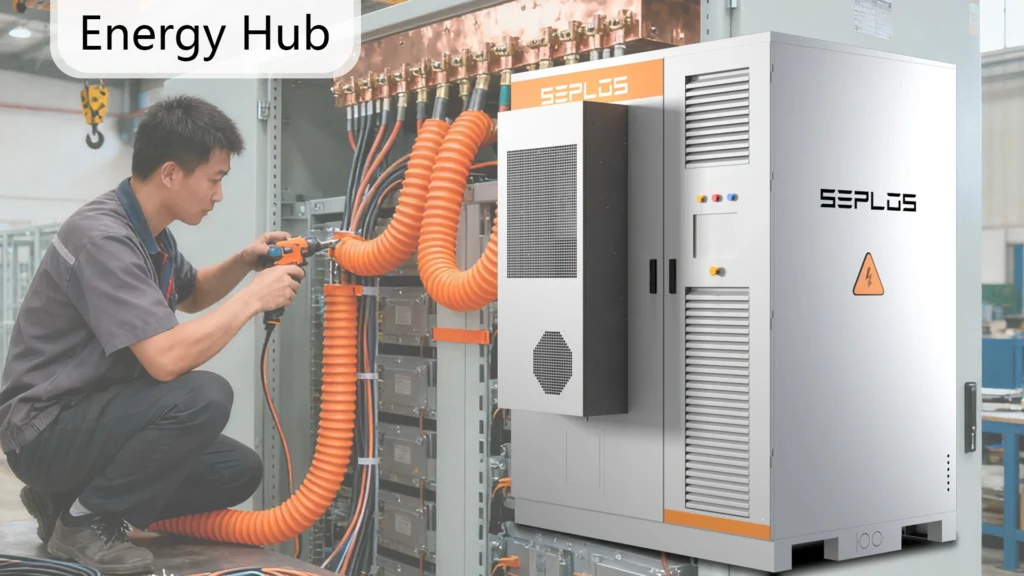
High voltage battery systems are becoming the foundation of modern energy storage for commercial, industrial, and utility-scale projects. Compared with traditional low-voltage systems, they deliver higher efficiency, lower operating current, improved scalability, and better support for renewable energy integration. In this guide, you’ll learn what a high voltage battery system is, how it works, how it compares with low-voltage batteries, and why it has become the preferred choice for large-scale battery energy storage systems (BESS).
This article will explain the fundamentals of high voltage batteries in a clear, step-by-step way. We will compare high voltage vs low voltage batteries, explore their structure, advantages, safety features, and practical applications. By the end, you will have a solid understanding of why high voltage energy storage systems are shaping the future of clean energy.
What is a high voltage battery system?
A high voltage battery system is an energy storage system that typically operates above several hundred volts (commonly 600V–800V). Compared with low-voltage batteries, it delivers the same power with lower current, reducing energy loss, improving efficiency, lowering cable costs, and making it ideal for commercial, industrial, and utility-scale battery energy storage systems.
High Voltage vs Low Voltage Battery: Key Differences
| Feature | High Voltage Battery (e.g., 800V) | Low Voltage Battery (e.g., 48V) |
| Voltage Range | 594V – 803V | 42V – 58V |
| Operating Current | 50A – 100A | 100A – 200A |
| Safety Requirements | Multi-layer protection (cell, module, pack) + sensors and extinguishing devices | Basic protection against short circuits and overcharging |
| Typical Applications | Large-scale energy storage, high-power loads | Small devices, car starter batteries, home energy storage |
| Efficiency | 92% or higher | 85% – 90% |
| Cost | Lower system cost due to reduced cabling and components | Higher cost for large systems due to thicker cables |
In simple terms: High voltage batteries are designed for big, demanding systems, while low voltage batteries are suitable for smaller applications.
The Advantages of High Voltage Battery Energy Storage Systems
1. Cost and Efficiency Benefits
- At the same power level, high voltage systems require thinner cables, reducing material cost by 30–50%.
- Fewer converters and relays are needed, lowering integration costs by around 20%.
- High charging/discharging efficiency (≥92%) saves 15–25% in annual energy losses compared to low voltage batteries.
2. Scalability
- High voltage batteries can be combined into megawatt-level energy storage systems. For example, four 200kWh units can form a 1MW system.
- They are highly compatible with large solar power plants, wind farms, and grid balancing projects.
3. Reliability and Long-Term Performance
- With advanced battery management systems (BMS) and strong safety layers, high voltage storage provides both stability and durability.
Core Types of High Voltage Batteries
The most widely used type is the lithium-ion battery, particularly Lithium Iron Phosphate (LiFePO4 or LFP).
Lithium Iron Phosphate (LFP)
- High safety: thermal runaway temperature above 200°C.
- Long cycle life: 8,000 charge/discharge cycles.
Other emerging options include sodium-ion batteries, but LFP remains dominant in the market due to its proven safety, reliability, and cost-effectiveness.
Key Technical Parameters
1. Voltage
- Nominal cell voltage: 3.2V for LFP, 3.0V for sodium-ion.
- A battery pack voltage = cell voltage × number of series-connected cells.
- Exceeding designed voltage limits may permanently damage cells.
2. Voltage Consistency
- Within the same pack, the difference between cell voltages should be ≤50mV.
- Poor balance can lead to overcharging or deep discharging, accelerating battery aging.
3. Self-Discharge Rate (K Value)
- LFP batteries: 0.2%–0.5% per month.
- Sodium-ion batteries: 0.8%–1.2% per month.
- Lower self-discharge means longer storage life and safer operation.
Structure of a High Voltage Energy Storage System
A complete high voltage energy storage system consists of core storage units and supporting control components:
Core Units
- Battery Cells: The smallest energy unit, similar to the heart of the system.
- Modules: Multiple cells connected in series, e.g., a 20-cell LFP module = 64V.
- Battery Clusters: Several modules plus casing, e.g., five 64V modules = 320V cluster.
Auxiliary Units
- BMU (Battery Management Unit): Monitors voltage, temperature, and calculates SOC/SOH.
- BCU (Battery Cluster Unit): Manages data from BMUs and controls cluster operation.
- Thermal Management System: Maintains 25–45°C through air or liquid cooling.
- PDU (Power Distribution Unit): Relays, fuses, insulation monitoring.
- EMS (Energy Management System): The “brain” that optimizes energy dispatch between solar, grid, and battery.
- Fire Protection: Fireproof casing, smoke sensors, and extinguishing systems.
High Voltage Battery Technology: A Human Body Analogy
Think of a high voltage battery system as a living body:
- Cells = Heart
- BMU/BCU = Nervous System & Brain
- PDU = Blood Vessels
- EMS = Brain Cortex (decision-making)
- Thermal Management = Blood Circulation
- Fire Protection = Immune System
- Structure = Skin and Bones
- PCS (Power Conversion System) = Limbs (interacting with the outside world)
Every part must work together. If one fails, the whole system could stop functioning. This highlights why system integration and safety design are critical in high voltage energy storage.
Applications of High Voltage Energy Storage Systems
1. Solar Energy + Storage
- Store excess solar power during the day and use it at night.
- Improves self-consumption and enables peak shaving.
2. Commercial and Industrial Facilities
- Stabilizes electricity supply for factories with high power demand.
- Helps businesses reduce electricity bills by avoiding peak tariffs.
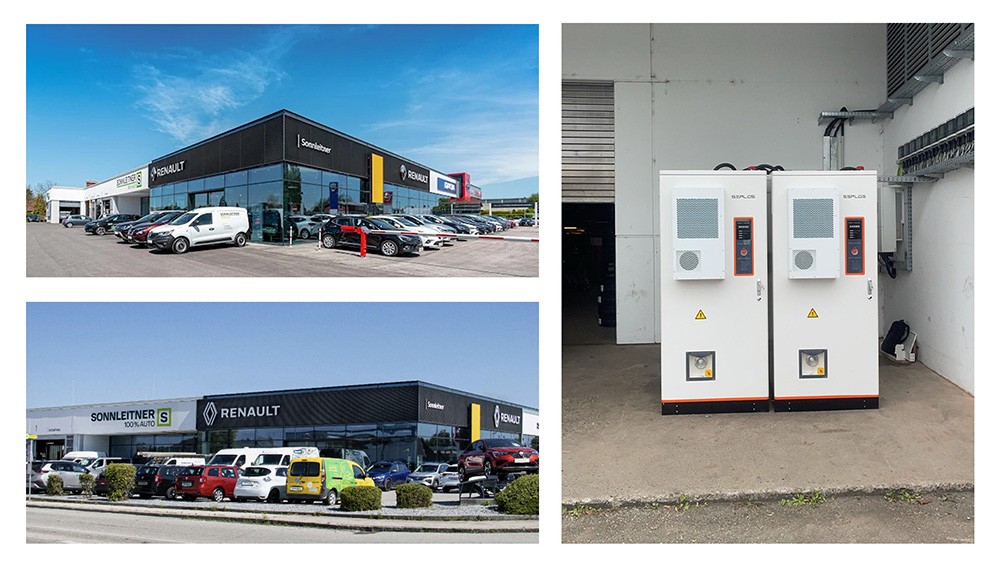
On September 22, 2025, the Seplos team deployed an energy storage system at a car dealership in Austria. Powered by two UltraPower 100 units, the system delivers 206 kWh of stable capacity. It enabled the dealership to achieve peak shaving and valley filling, optimize its power usage strategy, enhance efficiency, and significantly reduce electricity costs.
3. Grid Support and Large Power Plants
- Balances renewable energy fluctuations.
- Provides backup power and enhances grid stability.
High voltage batteries are the future of energy storage. With higher efficiency, lower costs, and scalability, they are quickly replacing low voltage systems in large-scale applications such as Industrial Park Energy Storage and utility scale Energy Storage. Their integration with solar, wind, and smart grids makes them a key technology for a sustainable energy future.
For businesses, investors, and engineers exploring energy storage solutions, understanding the basics of high voltage battery systems is the first step toward making informed decisions.
FAQ
What is considered a high voltage battery system?
Most commercial and utility energy storage systems operating around 600V–800V are classified as high voltage battery systems, although exact voltage ranges vary by application and local standards.
Why are high voltage batteries more efficient?
Higher voltage means lower current is required to deliver the same power. Lower current reduces heat generation, cable losses, and overall system energy consumption.
Are high voltage battery systems safe?
Yes. Modern systems combine LiFePO4 batteries with BMS, insulation monitoring, thermal management, fire protection, and multiple electrical safety mechanisms to ensure reliable operation.
Where are high voltage battery systems commonly used?
They are widely used in commercial buildings, industrial facilities, renewable energy plants, microgrids, and utility-scale battery energy storage systems.
Conclusion
High voltage battery systems have become the preferred solution for large-scale energy storage because they offer higher efficiency, better scalability, lower operating current, and advanced safety protection. As renewable energy deployment continues to grow, understanding high voltage battery technology helps engineers, project developers, and business owners design more reliable and cost-effective ESS solutions.
Planning a commercial or utility-scale energy storage project? Contact Seplos to discuss high voltage battery system solutions tailored to your application, capacity, and grid requirements.